
MY FAVORITE NUTRITION TRAVEL TIPS
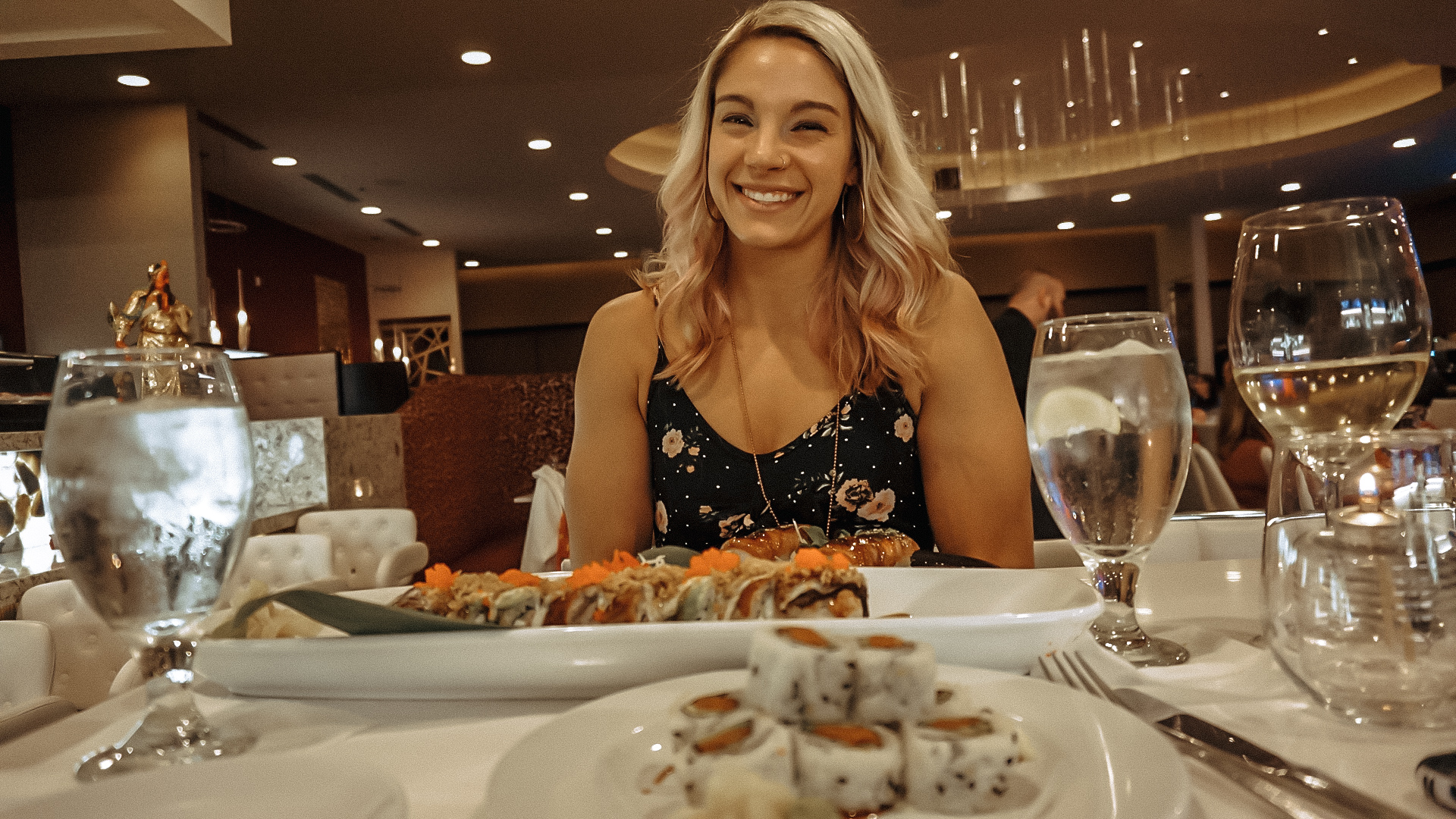
One of the most frequent topics I discuss as a nutrition coach is how to successfully stay on track with goals while traveling. This is understandably a confusing and anxiety-filled topic. Yet, the answer to success is simple. You must care and really be intentional about your choices and decisions no matter what your overall goal is. In this piece, I will offer some helpful tips for different travel situations. It is important to understand that ANYTHING can be successfully executed in any situation if you put enough effort and intention behind it enough.
Personally, I have had some real-life experience with successfully executing all spectrums of a nutrition program while traveling. As an athlete first (and hardest) cut to the 63kg weight class came at a time when I was traveling frequently. In particular, I vividly remember being at the GRID League Combine (2015ish) in Las Vegas for an entire week, staying in hotels, eating buffet food, being social at poolside parties, but caring so much about my competition and the weight cut that came with it, that I made it work. That was probably the most challenging travel that has even been for me while following a nutrition plan. I knew I had very little room to stray from my blueprint of attack if I wanted to successfully make weight only a few weeks later.
This was a very specific (and not common) circumstance when it comes to travel and most clients I am dealing with are simply focused around traveling with family to a vacation, enjoying a holiday week road trip, or maybe being at a work conference for a few days without completely setting themselves back when it comes to progress. All of these trips can be approached differently yet they should ALL have the same underlying theme:
1) Thinking ahead and planning accordingly
2) EFFORT AND INTENTION toward our goals and making decisions in the moment that support it.
In my opinion, approaching nutrition when you travel significantly depends on where you are in your nutrition journey and what the intent of the trip is. If you are in the middle of a cut for example, and its lets say a business trip to a multi-day conference, your nutrition approach is going to look alot different than if you were an athlete looking to make weight 2 weeks after a thanksgiving vacation with your family, and its also going to look very different than someone with general weight loss goals who is simply looking to not fall completely off track during an anniversary trip to Cancun.
Some questions I will ask my clients:
1) How do YOU want to approach the trip? (no scale, no tracking, no logging at all?)
2) What does travel look like? (car, plane, etc)
3) Where will you be staying? (hotel, air b&b, family house)
4) What will your movement access look like? (just walks, the gym, a ski trip)
From there, I will use the below guidelines to recommend a plan for them that best suits their personal trip and where they are personally with their nutrition journey.

——————————————————————————————————-
TRAVELING DURING A CUT
Now, when I refer to a “cut” here, I am referring to a CUT WITH CONSEQUENCES – like an athlete cutting to make weight at a national lifting meet, and not so much a 8-12 week cut just to lose weight/be leaner. The former has consequences we do NOT want to face (like not being able to lift at the meet), the latter has consequences we can easily work around (maybe needing to add another week onto the end of the planned-cut to account for vacation). This traveling scenario is probably the most difficult and requires the most dedication. Some of the helpful tips and recommendations I am going to give may result is strange looks from others – both those who know you well and those who don’t. That is understandable, but you are on a specific mission and have specific goals. Note that this is a very unique situation, and some of these “extremes” SHOULD NOT be present during every travel situation. Traveling during a cut is a very common occurrence and I have some tips to get you from point A to point B without affecting your progress!
- Bring your food scale. I know this may be a pain and may send some strange looks your way. But, in airports, hotels, and long car rides, having your scale handy can help you stay on track and make sure you are getting enough of what you want. Very often, I find that my clients who don’t bring a scale tend to avoid meals or snacks in fear that they will overestimate. You are cutting and calories are already limited – packing your scale will ensure that you are getting what you need. This also allows my clients to chose better food options, as they aren’t always grabbing something packaged on the go just for assurance of nutrition facts. There are small travel scales available in almost any kitchen store that are about as big as a calculator and can be packed in a carry on very easily.
- Be a protein hunter. Protein is usually the macronutrient that is hardest to find and fill while traveling. It seems that so much “on the go” food is much lower in protein than it is in carbohydrates and fat. Protein is also the least sustainable macronutrient meaning it tends to spoil fast, and usually isn’t easy to transport. I always teach my clients to be hunters of protein when they are traveling. Whenever you can, order extra lean meat like chicken breasts or turkey burgers. Grabbing things like jerky stick, cheese sticks, Core Power milk or yogurts from gas stations or airport shops can also help. This will allow you to have constant protein sources that are going to come from places other than powders and bars. Most of my cutting athletes are already accustomed to eating lean meat as a main source of protein, so this allows their bodies to stay comfortable with familiar food.
- Pack familiar foods. This one seems obvious, but it is surprising to me how many of my clients often forget. By packing familiar snacks and foods, we can keep our body eating like “normal” as possible which will make our progress trend in the right direction. Think about the foods that you eat daily. If it can be packed and consumed while traveling – BRING IT. Items such as bars, wraps, single-serving oatmeal, nut butter packs, fruit, nuts, single-serving yogurts, rice cakes, and even deli meats are all great options of familiar foods that are easily transportable. If you are able to pre-make meals (or use a meal delivery service) and can pack them with you in a cooler bag, go ahead! This will make your life much easier and keep your belly and your weight cut happy!
- Restaurant strategy. When cutting, I always recommend my athletes dine out at restaurants as little as possible (which is why the above 3 steps are so important). However, it is very likely going to happen a time or two. My advice is to order as PLAIN as possible. A simple order of a lean meat and steamed vegetables is always a safe plan. A salad topped with lean meat and dressing on the side is another safe bet and will likely fill you up great from sheer food volume and fiber! This sounds pretty boring, I know – but keep in mind, a trip like this is unique and there is a specific goal at the end of the tunnel.
TRAVELING WITH PERFORMANCE IN MIND
This would be traveling for a competition, or traveling while training for something important (like a competition) or simply wanting to feel your best throughout your travels – both in the gym AND out of it. A trip like this would be somewhere where you intend to eat “normally” and would like to feel good while traveling while also enjoying what the trip has to offer. This is where making healthy choices in order to ensure you perform and feel your best is the primary goal. Sometimes, this is challenging for my clients as they don’t have a specific weight loss goal ahead of them to keep them totally “strict”, yet they don’t want to completely derail the progress we have made and affect training or performance. Strict isn’t the word I would use on a trip like this referring to nutrition – this one falls more under the category of “smart”. Some of the same keys from above could absolutely be useful (like being a protein hunter!), but here are a few specifically for this kind of trip:
- Continue to track and log. I often find that my clients decide to forgo tracking and logging altogether when traveling. I feel that privilege comes with experience and sometimes even the most skilled travelers can benefit greatly from continuing to track their food on the road. Yes, it is very likely you will be estimated 90% of the time and that is fine! However, it will keep you in the ballpark of your normal intake and it will allow you to make sure you are getting enough protein (we already covered how that often suffers in travel). There is probably no need to bring a scale to weigh and measure everything, however, keeping tabs on what you put in your body is going to help performance and keep you feeling great. Use the experience and knowledge of tracking that you have gained up until this point to help you best guesstimate on portion sizes.
- Choose quality, everywhere. This is often a difficult task on the road, yet it can most certainly be done. Some of the strategies to execute this have already been covered above. It is important to understand that restaurants often use much more additives (oils, butters, salt, sugar) than you are used to using at home. Food options that may appear just fine could be covered or soaked in an unknown. It is incredibly beneficial to scope out foods and food establishments that are simple. When in doubt, refer to #4 from cutting. There really is a “best choice” ANYWHERE you choose to eat and although it may not be the most appealing choice, it will absolutely help you feel your best and stay in line with your goals.
- Fast food doesn’t mean off-limits. This is an important one to remember as I find a lot of my clients feel “guilty” (a word I despise in reference to food/nutrition) when they consume some kind of fast food. I am have a compilation of a handful of “fast food” establishments highlighting “better” options at each. Almost every single fast-food chain I have looked into has an option that could easily fit within performance goals, macronutrient tracking, health goals (and honestly even cutting goals!) while traveling. It is important to educate yourself on this and look into the establishment’s nutrition facts before ordering. This shouldn’t be a consistent habit at home, however, when you are on the road it is great to have the knowledge of fast food nutrition as some quick options to have when you are on the go!
- Enjoy the ride. Food, and eating, is incredibly social and a very big part of experiencing a new town, state, or country. Personally, I always want to find a “local favorite” spot (or two, or three) and try it out to get a real feel for the environment I am visiting and also to try different kinds of food out there. This is incredibly healthy and can successfully be done without hindering goals or progress. There are plenty of ways to follow some of the above strategies while experiencing some great eats. In addition to that, I always encourage my clients to enjoy one “free meal” (a meal of their choice that is untracked yet not overboard) at some point – no matter their nutrition goals. If you are traveling for a competition, this would ideally be your post-competition meal before you head home. Doing this allows for some great food experience, happiness, and enjoyment of the trip before you head back into “real life”.
TRAVELING FOR PURE LEISURE
Although this scenario is the most lenient, it is often the one that gives my clients the most anxiety as they are very uneasy about the fact that they will have no strict guidelines or reasons to stay on track. This is where the importance of building solid nutrition habits daily comes into play. If you have a strong foundation in quality nutrition on a day to day basis at home, executing those same habits on the road will not be incredibly difficult. Here are some tips to allow you to enjoy your vacation, while not throwing all of your hard work away.
- Be mindful of exercise (or lack of) and eat accordingly. Most of my clients are very active individuals. They attend some kind of fitness class multiple times a week, are competitive athletes, or just very active people in general. It is not uncommon for activity level to drop significantly when these types of people vacation (that is the point of getting away and there is nothing wrong with that)! However, it is important to keep that in mind when eating. The most common question I receive is “How should I adjust my intake for vacation?”. I recommend keeping protein and fats steady, and only filling carbohydrates as you feel needed. You will likely find that you are less hungry for carbohydrates when your body is not exercising as much and that is a sure sign to honor by not consuming as many. On the opposite end, there are vacations that are going to require just as much fuel as regular training days at home (or maybe even a bit more). Trips like skiing or snowboarding, hiking, biking, touring cities where you are walking miles and miles daily, will all require just as much fuel as your normal days (or more!) and you may find you are more hungry. Trust those hunger cues and aim to eat accordingly while prioritizing nutrient dense food.
- More quality. This is a simple rule of thumb where all of your meals should contain foods of more quality than less. Lower quality foods would include items such as fried foods, processed grains, low protein dishes, plates with minimal to no vegetables, and huge desserts or drinks loaded with sugar. All of these meals are going to leave you feeling too full, too swollen, all while leaving you with little vitamin or nutrient intake. Be sure to seek out quality foods wherever possible (which is pretty much everywhere if you try hard enough!). Foods such as lean meats, fish, vegetables, nuts, “as plain as possible” carbohydrates like rice, potatoes, quinoa are all items that should be on your list and should catch your eye (and mouth) whenever they can.
- Salad to start, sauce on the side. This is a handy restaurant trick that is a great tool to limiting excessive caloric intake. While your party is ordering appetizers, it works well to order a house salad to start. This allows you to partake in the social aspect of eating while everyone else is consuming appetizers, yet takes the temptation away to grab a few chips or fried items that quickly turn into way too many. If you are patient, social, and eat slow, you will be through your salad by the time the appetizers are gone. You will feel great physically and mentally, and will enjoy your meal much more! “Sauce on the side” is another one of those handy tools. Whenever ordering a dish with some kind of sauce, dressing, or spread, be sure to ask for it “on the side”. This ensures you will get to enjoy the delicious topping without using an excessive amount. I find this strategy also helps me to enjoy my dish more, as the dish becomes the actual superstar instead of letting sauce or dressing take over.
- Establish “bare minimum” habits. These are habits that have nothing to do with tracking or measuring your food and can be executed no matter the circumstance. Things like fruit intake, veggie intake, water intake, steps/movement, limiting alcohol, getting enough sleep – are all things that can be considered and adhered to when vacationing and can make a HUGE difference in how we feel. I always ask my clients to set some bare minimums that they feel are realistic for them and we talk about how to execute those things and keep them at the forefront of our minds on vacation.
- Loosen up and enjoy responsibly. This is an easy one and the one you were most likely waiting to hear. There is nothing wrong with spending a day or two of vacation time enjoying your favorite dish, or something you were looking forward to even if it follows none of the above strategies (except the bare minimum one LOL!). My advice for that is to simply enjoy it. Do not let one day turn into five. Do not cram multiple high caloric meals into a small time frame. Stop when you are full and trust the previous work you have put in to get you right back into routine after the trip. As mentioned earlier, one of the most rewarding aspects of travel is experiencing food and culture – make sure to do that! After you will easily get back to your normal routine, your normal choices and your body will get back to its normal state. This will make you love and appreciate yourself for all the hard work you put in on a day to day basis to ensure that your body is a high functioning, energy-burning machine!

These strategies were broken up into specific categories, however, you may find you work better following any combination of them for some or all of your different journeys. The most important thing to remember when traveling is you need to CARE. When you care about something it will be much easier to make better choices, stay the course, and execute what you want. It is also important to remember that staying the course doesn’t have to include a lack of enjoyment or a missing out on the fun. It just has to include some thinking ahead, some responsibility, and a solid assessment of goals and priorities. Every day we are building habits both in the gym and in the kitchen – the better habits we build daily, the easier it will be for us to carry them with us all over the world!
If you are interested in contacting me, or learning more about the nutrition programs I have available – you can find me at honoryournutritioncoaching.com.
A DIVERTED PIT-STOP
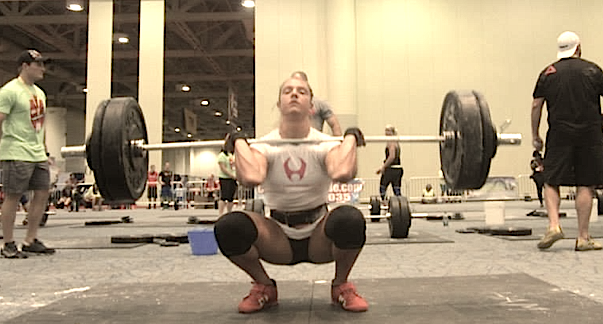
Recently, I made the decision to try and qualify for the American Open. The American Open is a national level weightlifting meet that features the best in the sport and allows them to go head to head to see who can put the most poundage (or kilos I guess) overhead using two different methods: the Snatch and the Clean & Jerk. This year it is held in Dallas, TX in early December.
But wait, I thought I was a “Crossfitter”. I am, competitive exercise is currently my sport. However, for the past 6 months-ish I have been following the programming of Rudy Neilsen’s Outlaw Way. This programming is geared toward crossfitters looking to succeed at the regional and games level by putting significant emphasis on the Olympic lifts (Snatch & CJ). The reasoning behind this being that 1) teaching an athlete how to properly perform the olympic lifts teaches them an immense amount of body control, force production, and rapid muscle fiber recruitment – all very valuable in the sport of exercise and 2) many events that we do in competition contain these lifts in some form. Needless to say, following this programming day in and day out I have grown to really appreciate these lifts and have seen significant improvements in my numbers. I have also watched some big names in the CrossFit world like Elisabeth Akinwale and Lindsey Valenuzela have great success in both the sport of exercise and the sport of weightlifting and to me that’s pretty damn cool.
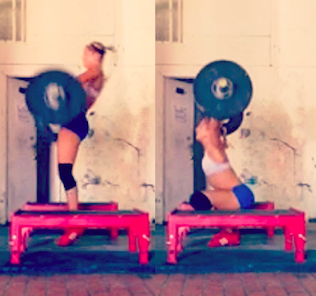
A few weeks ago, on two separate occasions I had some friends who know the sport of weightlifting ask me if I was going to try and qualify for the American Open. I laughed both times and told them I was an exerciser, not a weightlifter. Then, about a week later, after thinking about their comments almost every day I realized how silly I would be to not look into this more. So I did some research and number crunching (by number crunching I mean converting lbs. to kg.) and came up with this:
I weigh 150 pounds which would put me in the 69kg weight class.
My current PB total (snatch and CJ combined) is 355lbs (161.3 kg).
The qualifying total for the 69kg weight class is 152kg or 334.4lbs.
I realized I would never let this escape my mind if I didn’t actually pursue it. I ran it by a few of my coaches and got enthusiastic affirmations from them, which solidified my ideas. So here I am. I am registered for a qualifying meet on September 22nd in my hometown and am pretty stoked. Of course nerves come and go, they always do with me. I think this time they’re here a little more because this is so new to me. I literally have NO IDEA how a weightlifting meet works. I am learning more and more everyday in preparation and I am even starting to finally understand kilos!
For those of you who are unfamiliar (like I was a week ago) with how a weightlifting meet runs I will give you my best rookie rundown. You have 3 attempts at each lift. You must declare an opening weight (first attempt) and then after that can decide what you would like to have on the bar for your second attempt. Ideally I want to hit my openers, then qualify on my second attempts. In the event that I miss my second attempt, I would have my third attempt to try again. The end goal (for me) is to complete two lifts – one Snatch and one CJ – that will combine to equal 152 kilograms. I am still unsure if a singlet is required though.

My workout regiment will change very little in the next two weeks. I will continue to follow the Outlaw Way programming for the most part. Between now and then I have to decide on an “opening weight”. Thankfully I have some great coaches in the sport helping me with this. My conditioning pieces will not change (after all, I am an exerciser first) and my supplemental gymnastics work that I have recently added into my programming because of specific weaknesses will continue. That’s what was one of the coolest parts of this new venture – I am prepared without even knowing it.
However, what I think THE coolest part about this whole sport is: when I step out on that platform, none of this really matters. My current numbers don’t matter. It doesn’t matter if my current total is 50 pounds over what I need to qualify. If I don’t successfully complete the lifts there, that day, I don’t qualify. The gutty performance aspect is there – and I’m always up for that test.
This is going to be a ton of fun.
On a different note — I competed with some awesome people this weekend at the Fall Faceoff in Albany NY. Here is my boyfriend Adam (yeah, were lame and matching), my good friends Riki and Brian, and myself on the podium (Coach Daniel not depicted). We had an awesome podium finish taking home 3rd, and had a hilarious time all weekend.

LIVE UNDER THE BAR

Recently, I’ve been living under the bar. Here is why.
Looking back, I now know I was simply born a competitor. I was born to walk up to a challenge, size it up, look it square in the face, and overcome it. Not just overcome it – but actually demolish it. Then, and only then, am I satisfied. Maybe for the day, maybe for only a few hours – until a new challenge catches my interest and I realize I have the ability to be even better that I thought possible. This is the constant circle diagram that is my life.
Growing up, that diagram was applied to the sport of basketball. I have been a competitive basketball player at high levels my entire life. It started out as a fun game, something that I enjoyed to do, something that I was genetically built for, and it just accidentally became the victim of my competitive nature. I quickly learned this was not a bad thing. I was blessed with some God given athleticism and the will to work hard. I soon learned how to apply them to my competitive nature and my need to be successful so I could use it to my advantage.
After 16 years of basketball and four years of playing at the division 1 level for a mid-major college some fire in me was gone. I was still competitive, but the fun had minimized significantly and I knew my passion flame was starting to shrink. Add two knee surgeries into the mix, one that cost me my ENTIRE left meniscus (the protective cushion in the joint) and the knee pain just wasn’t worth the game anymore. I never desired to play overseas professionally or walk into a WNBA tryout; I was almost ready to walk away from being a competitor.
Then I found the bar. And started to live under it.

I was introduced to CrossFit (I will refer to it often as competitive exercise) accidentally. I didn’t think much of it – I thought it would be a cool way to stay in shape in my retired basketball days. But… naturally it didn’t take long for me to realize I needed to improve in many things and had the ability to be able to compete with some of the best one day if I worked hard – there is my competitive nature. Insert aforementioned circle diagram of Nicole’s life here. So now here I am, under the bar. Same story, different sport. Where I use to walk around dribbling my Rock with a huge smile on my face, I am now swinging kettlebells and flying under barbells with that same huge smile. I could not be happier or more excited.
My passion is back; my excitement to get up everyday and get better at something has returned. I have found something that is FUN again! The idea of “getting back in the lab and working” as I use to refer to my time on the basketball court is present everyday now. But instead I am in a gym laced with rigs, rings, bumpers, and barbells. Instead of analyzing my exact thumb and elbow placement on my 3-point shot and then heading over to the court to take 300 of them the right way; I am now watching endless videos of bar track and footwork on my Olympic lifts, or my hip explosion and body awareness in my gymnastics movements – only to head over to the gym and get a ton of reps in right.
I’m still getting use to this, still trying to fit in – until I accidentally wear my basketball shorts to do “Fran” or start to follow through on wall balls and realize I am probably always going to be a baller at heart. Something I am now okay with.
Living under the bar has been so amazing because it re-ignited in me something I thought I could never feel again. It has brought me back some of my favorite feelings – hard work, pressure, challenge, victory, accomplishment, excitement, approval and satisfaction. Just like before, every day I want to be better. I want to perfect my craft. Then I want to walk out in front of as many people as I can, poised and confident, and perform. I want to show them the fruits of my labor in hopes they will then understand dedication and heart and apply it to their own lives.
Living under the bar, or on top of the rings, isn’t easy. I don’t want it to ever be easy. Basketball was never easy. Life is never easy. That’s the great part about all of this though. It is a perfect lesson in walking up to something difficult, sizing it up and down, looking it straight in the face, and overcoming it. Not just overcoming it – but demolishing it.
Follow me as I continue to live under the bar… with a huge smile on.

*You can find this post and other posts by my peers and I at:
 NICOLE ROGGOW